Should You Get a Rooftop Tent? The Pros, Cons, and What to Know Before You Buy.

If you’re tired of setting up a ground tent or want something that keeps you off the dirt and away from critters, a rooftop tent might seem like a solid upgrade.
We’ve been using a rooftop tent for a few years, and the number one question people ask is, “Is it worth it?”
The answer depends entirely on how you camp.
If you move camp every day, dislike climbing ladders, or camp only a few times a year, probably not.
If you set up a basecamp and explore from there, camp in places where the ground is rocky or full of critters, and use it often enough to justify the cost, maybe.
Here are some rooftop tent pros and cons to know before you spend $1,000 to $4,000 on one.
Rooftop Tent vs. Ground Tent: What’s the Difference?
The biggest difference is where you sleep. A rooftop tent mounts to the top of a vehicle or trailer, while a ground tent stays, well, on the ground.
Rooftop Tent Advantages:
- Keeps you off the dirt, away from bugs and critters
- Faster setup once mounted
- No need to find level, debris-free ground
- Can store bedding inside when folded up
Ground Tent Advantages:
- More affordable and widely available
- Can be set up anywhere, not just on a vehicle or trailer
- No added weight or height restrictions
- More interior space and headroom
Which one is better? That depends on your budget, camping style, and whether you’re willing to deal with the quirks of a rooftop tent.

Rooftop Tent Pros and Cons to Consider Before You Buy
A rooftop tent costs anywhere from $1,000 to $4,000, and that’s before you factor in mounting hardware, installation, and the reality that you might hate it.
Here’s what to think through before you spend that kind of money.
How Do You Camp?
If you’re the type who moves camp every day, a rooftop tent mounted on your vehicle is going to get old fast. You have to pack it up every single time you want to drive somewhere.
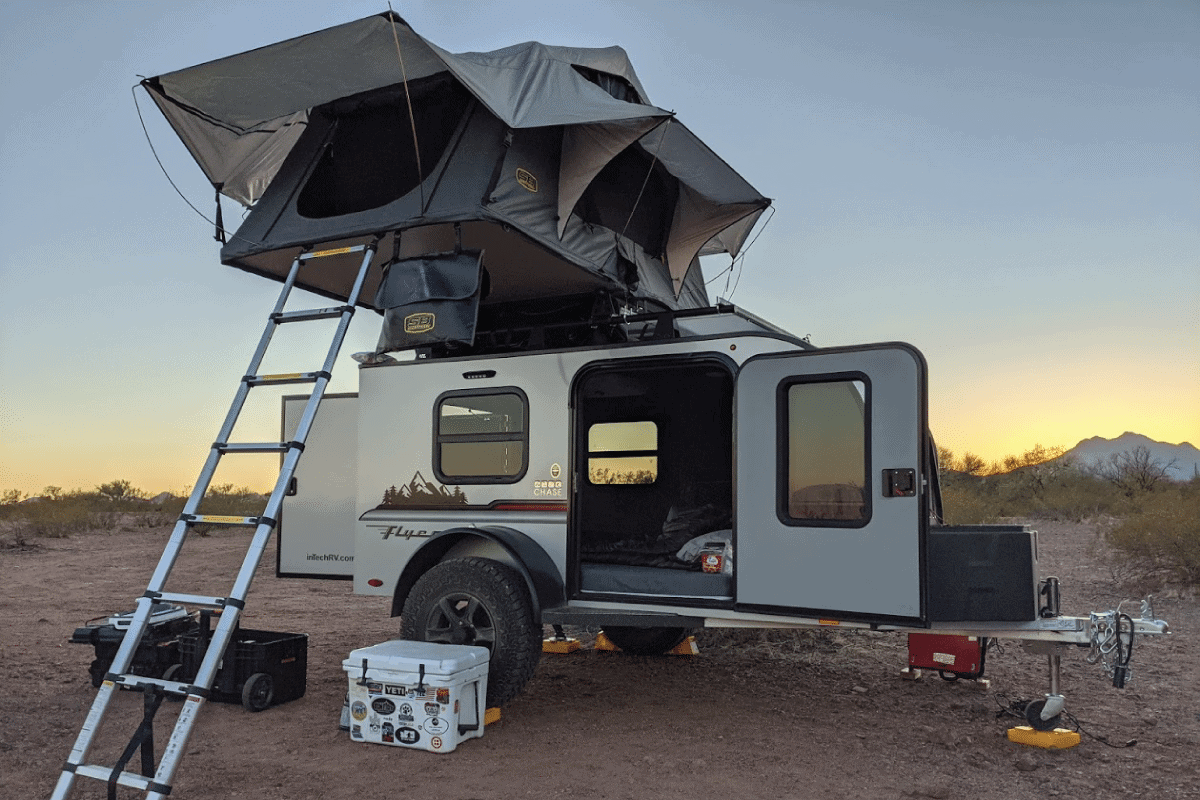
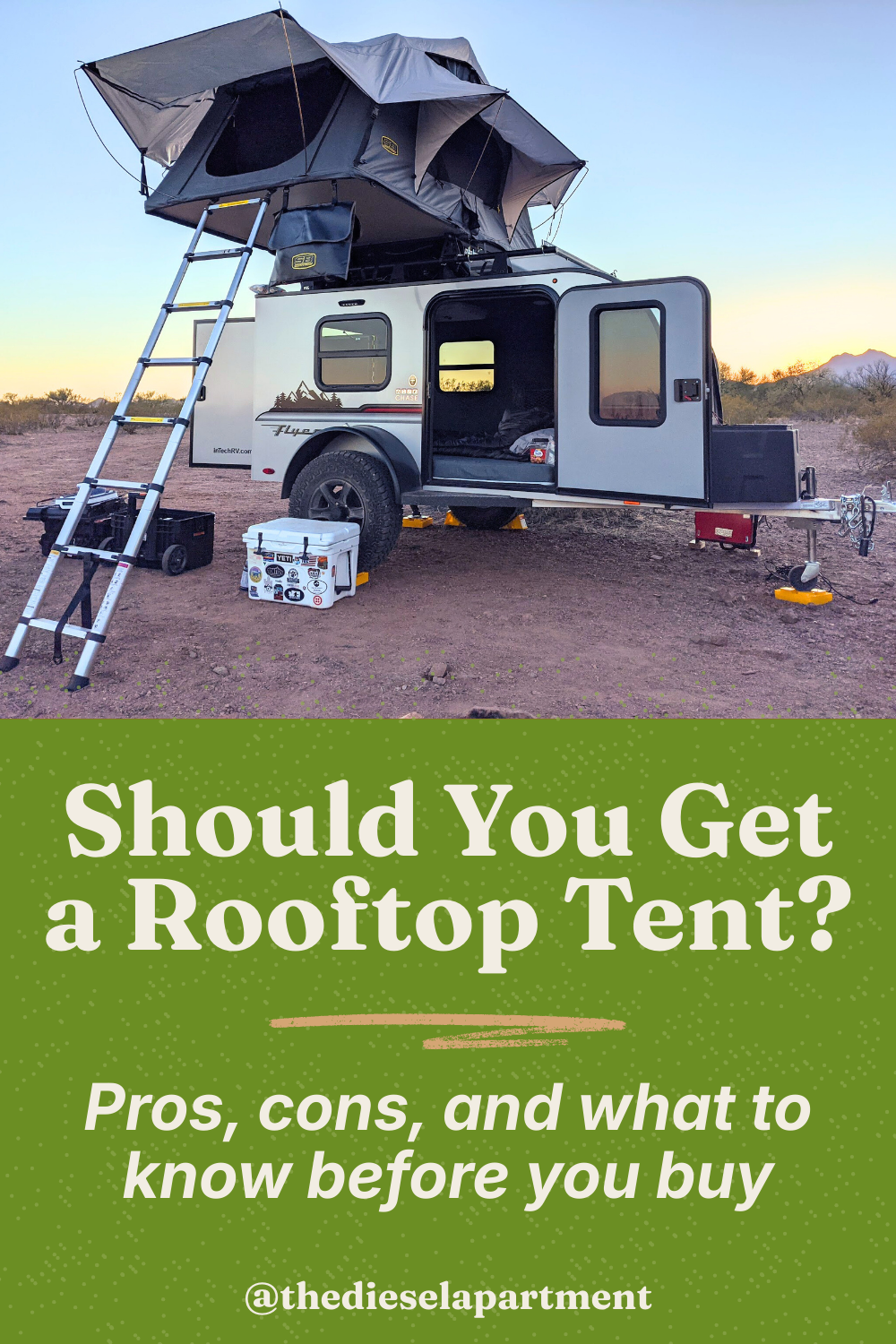
We mount ours on a trailer, not our Jeep. That means we can set up a basecamp, leave the tent there, and drive off to explore without losing our spot. For us, that’s the entire point.
But if your rooftop tent lives on your roof rack, be honest with yourself about whether you’re willing to fold it up every morning. If the answer is “probably not,” you’ll end up leaving it set up and being stuck at camp. Or you’ll stop using it.
Weekend trips vs. longer stays
Rooftop tents make more sense if you’re staying put for a few days. If you’re hopping campgrounds every night, the setup and teardown will wear you down.
Dispersed camping vs. campgrounds
If you camp in established campgrounds with amenities, a rooftop tent is overkill. You’re paying for level ground and a picnic table. A ground tent works fine.
But if you camp in the backcountry where the ground is rocky, uneven, or covered with cactus spines (hello, Arizona), sleeping off the ground makes much more sense.
What Vehicle Are You Working With?
Not every car can accommodate a rooftop tent, and those that can may not handle it well.
Check your roof’s weight limit. Most vehicles have a static weight limit (parked) and a dynamic weight limit (driving). A rooftop tent might weigh 130-200 pounds on its own.
Add two people, bedding, and gear, and you’re looking at 400+ pounds sitting on your roof. If your vehicle’s static limit is 300 pounds, you’re out of luck.
Roof racks aren’t all the same. Factory roof rails are not the same as a heavy-duty aftermarket rack. If you don’t have a solid rack, you’ll need to buy one. That’s another $200 to $800, depending on the setup.
Your vehicle’s height matters. Adding a rooftop tent increases your rig’s height. If you already drive a tall vehicle (such as a lifted Jeep or full-size truck), you may not fit under parking garage clearances or some trail obstacles. Be realistic about where you can go.
Daily driver or adventure rig? If this is your only vehicle and you commute with it, permanently mounting a rooftop tent will be inconvenient.
They kill your gas mileage, make parking annoying, and add wind noise. You’ll either take it off constantly or leave it on and regret it.

Budget Beyond the Tent
The sticker price on the tent isn’t the whole cost.
Mounting hardware: Most rooftop tents don’t include the rack or mounting system. You’re looking at an additional $200-$800, depending on your needs.
Installation: You can install it yourself if you’re handy, but these things are heavy and awkward. If you pay someone to do it, add an additional $100- $200.
Storage: When you’re not using it, where does it go? We leave ours mounted on the trailer year-round because we don’t have garage space. If you remove it, you’ll need space to store a 130-pound folded tent that’s roughly the size of a coffin.
Maintenance: The fabric must remain dry; otherwise, it’ll mildew. The zippers need occasional lubrication. The ladder will bend if you’re not careful. Budget time and money for upkeep.
If you camp once or twice a year, the math doesn’t work. If you camp 10 or more times a year, the per-trip cost becomes more meaningful.
Your Camping Deal-Breakers
Some things about rooftop tents are non-negotiable. If any of these sound like a problem, don’t buy one.
Climbing a ladder in the middle of the night: If you need to pee at 2 a.m., you’re climbing down a ladder in the dark. If that sounds miserable, it is.
Setup and teardown in bad weather: Rain, wind, and cold don’t stop just because you’re trying to fold up a tent. If you camp in areas where the weather changes quickly, be prepared.
Needing to leave fast: Ground tents pack up in five minutes. Rooftop tents take longer. If you need to bail quickly (weather, emergency, or just a change of plans), a rooftop tent slows you down.
Camping with kids or pets: If you have young children or a dog, getting them up and down a ladder every time they need something will be a hassle. Some families make it work. Others give up fast.
Solo camping: If you camp alone, a rooftop tent works fine. But if something goes wrong (injury, emergency), you’re stuck on top of your vehicle. That’s worth thinking about.
Storage and Logistics
Where does this thing live when you’re not using it?
If you have a garage or carport, great. If you don’t, it’s sitting outside, exposed to sun, rain, and whatever else your climate throws at it. That’ll wear it down faster.
We leave ours mounted on the trailer year-round because we don’t have space to store it otherwise. That works for us because we use it often enough to justify it.
But if you camp only a few times a year, leaving it mounted may not make sense.
Can you leave it on year-round?
Depends on your vehicle and how you use it. If it’s a daily driver, probably not. If it’s a dedicated camping rig, maybe.
How often will you use it?
If the answer is “maybe five times a year,” you might be better off with a ground tent and saving the money.
Why We Chose a Rooftop Tent
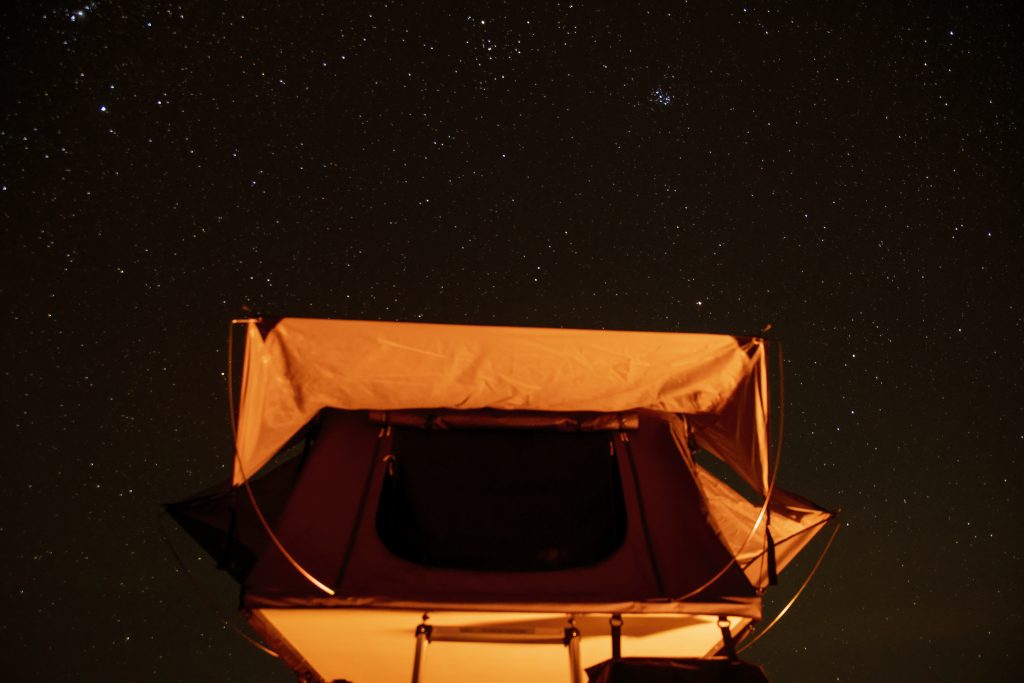
We Found One That Fit Our Budget
Rooftop tents can be expensive, but not all cost $3,000. We selected the Smittybilt Gen2 Overlander for $1,300.
Looking at it as a long-term investment, we figured that if the tent lasts 10 years and we camp at least 10 times a year, that’s about $13 per trip. For us, that was worth it.
It Lets Us Set Up a Basecamp
We prefer to establish a basecamp and explore from there.
Since our rooftop tent is mounted on our trailer instead of our Jeep, it means:
- We can leave camp without losing our spot.
- We don’t have to fold up the tent every time we want to drive somewhere.
- It gives us a secure place to store food away from wildlife.
If your rooftop tent is mounted on your vehicle rather than a trailer, be prepared to pack it up every time you move. That’s a dealbreaker for some campers.
It Keeps Us Off the Ground
Camping in the desert means there’s a lot of stuff on the ground that stings, bites, or crawls into places it shouldn’t.
Sleeping off the ground means fewer chances of waking up next to a rattlesnake, scorpion, or tarantula. It also keeps us away from ants, spiders, and whatever else roams around at night.
It Gives Us Separate Sleeping Spaces
One of us snores, the other is a light sleeper. Separate sleeping setups keep everyone happy.
We also like having the option to bring a guest camping without cramming everyone into a single tent.
We Use It as a Mini Hotel for Guests
Since we live full-time in a 39-foot motorhome, space is limited. When guests visit, they typically need to book a hotel or rent a park model, which isn’t cheap.
We can rent the campsite next to us and offer guests a private space to stay in our trailer or rooftop tent instead.

Things to Consider Before Buying a Rooftop Tent
Cost vs. Value
Rooftop tents are more expensive than a ground tent, so you have to decide if the benefits outweigh the cost.
If you only camp a couple of times a year, it might not be worth it. But if you camp often and want a faster setup, it could be a solid investment.
Setup and Teardown
Rooftop tents set up quickly once they’re mounted, but they’re not as instant as some people think.
- You have to unzip the cover, unfold the tent, and set up the ladder.
- If it’s cold or wet, expect condensation inside the tent.
- If it’s mounted on your vehicle, you have to pack it up every time you drive somewhere.
Weight and Vehicle Compatibility
Not every car or SUV can handle the added weight and height.
Before buying, check your roof rack’s weight limit and whether your vehicle’s suspension can handle it. If you have a smaller vehicle, a ground tent or trailer-mounted option might make more sense.
Weather Protection
A good rooftop tent keeps rain and wind out, but high winds can still make for a rough night.
- They stay warmer in the cold since you’re off the ground.
- They can get hotter in summer without airflow underneath.
- They handle wet weather well, but should be fully dried before storage to avoid mildew.
Would We Buy a Rooftop Tent Again?

Yes, but only because we mount it on a trailer and use it often enough to justify the cost.
If we had to pack it up every time we wanted to drive somewhere, we probably wouldn’t still be using it. If we only camped three times a year, we’d have sold it by now.
The pros and cons of rooftop tents vary for everyone.
For us, the pros (basecamp flexibility, off-ground sleeping in the desert, separate spaces) outweigh the cons (ladder climbing, weather exposure, upfront cost).
Your situation might be completely different.
Buy one if:
- You camp ten or more times a year
- You set up basecamp and stay put for a few days
- You camp where the ground is rocky, uneven, or full of things that bite
- You can mount it on a trailer or a dedicated adventure rig
Skip it if:
- You move camp daily, and it’s mounted on your vehicle
- You only camp a few times a year
- You need to bail quickly or pack up fast
- You’re on a tight budget, and a ground tent would work fine
The best gear isn’t the most expensive or the most Instagram-worthy. It’s the gear that matches your camping style and gets you outside more often.
Still Here? You Must Be the Human Equivalent of Well-Seasoned Cast Iron Pan.
Most people give up early, like tourists who underestimate the Arizona heat. But not you. You’re built differently. So why not join us for a camping chair on Substack?