What RVers and Travelers Need to Know About Arizona’s Monsoon


When we told people we were moving to the desert, the reaction was almost always the same:
“I could never live in a place without seasons.”
A lot of people assume Arizona is just cactus, dirt, and endless heat with no real seasonal changes. They couldn’t be more wrong.
Every summer, Arizona gets a dramatic, awe-inspiring weather shift. From blinding lightning storms to flash floods that appear out of nowhere, the monsoon is both a spectacle and a serious threat.
If you’re RVing, camping, or traveling in Arizona during monsoon, here’s what you need to know to stay safe and make the most of it.
When and Why the Arizona Monsoon Happens
The Arizona monsoon, technically called the North American monsoon, happens every year from mid-June through late September.
It starts when winds shift, bringing moisture up from the Pacific Ocean and the Gulf of Mexico. That moisture combines with the desert’s intense summer heat, fueling towering thunderclouds, powerful storms, and sudden downpours.
Arizona can get up to half of its yearly rainfall during monsoon. Every plant, animal, and human in the desert depends on these storms, but they also come with serious risks for travelers.
What Makes the Arizona Monsoon So Intense?
Monsoon is equal parts stunning and dangerous. Here’s what makes it unlike anything else in the country.
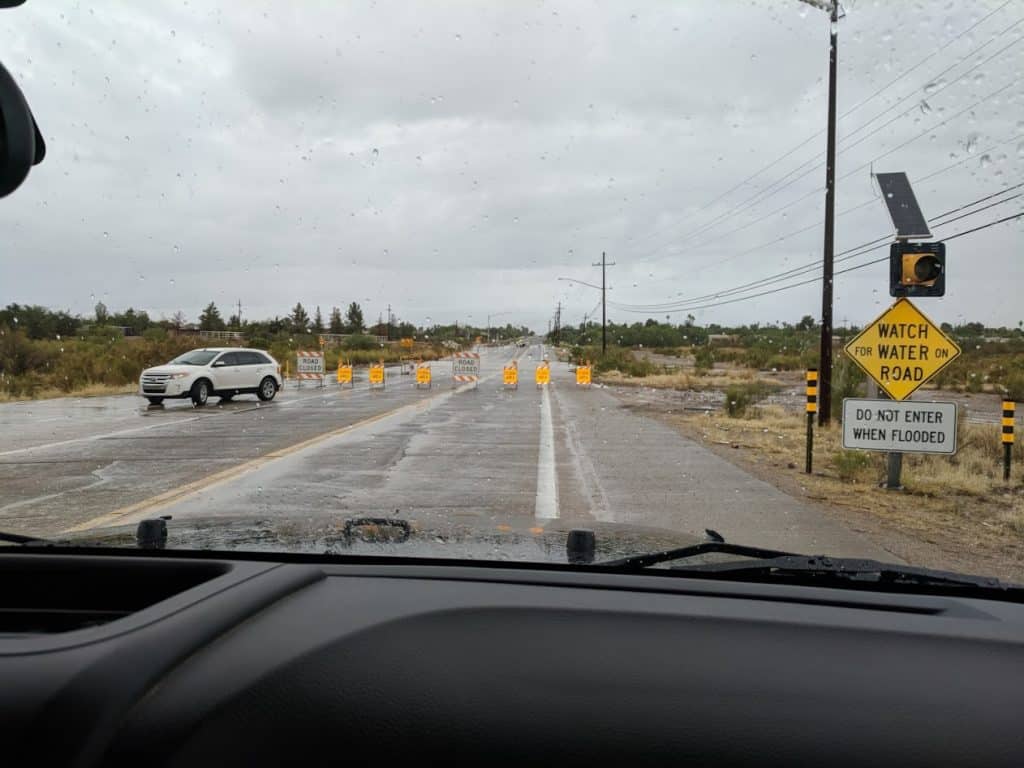
Flash Floods
It doesn’t take much rain to turn Arizona’s dry riverbeds into raging torrents of water. The desert’s rocky, hard-packed soil doesn’t absorb water well, so even a brief storm can cause a flood.
Why this is dangerous for RVers and travelers:
- Flooded washes can destroy roads. What looks like a shallow crossing can sweep your vehicle away in seconds.
- Storms can flood slot canyons and hiking trails. Water from a storm miles away can rush through a canyon without warning.
- Desert mud is no joke. If the flood doesn’t get you, the thick, sticky mud will.
How to stay safe:
- Never drive through a flooded wash. Even six inches of water can sweep a car away.
- Check the weather before hiking. If storms are in the forecast, even if it’s sunny where you are, avoid slot canyons.
- Know your campsite’s flood risk. Some dispersed camping areas become flood zones when it rains.
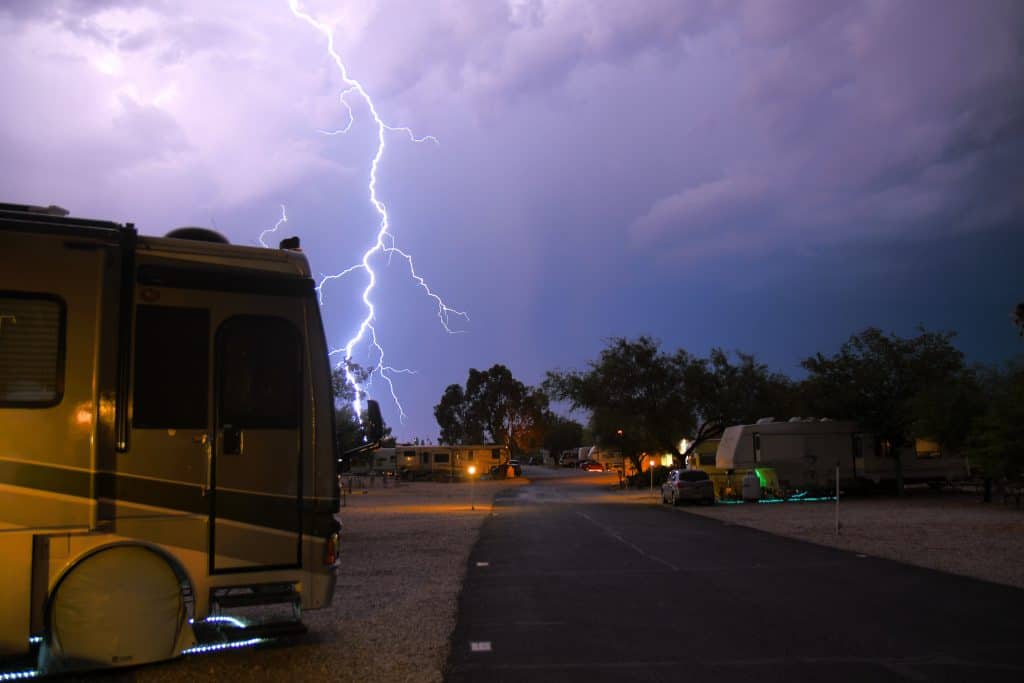
Lightning
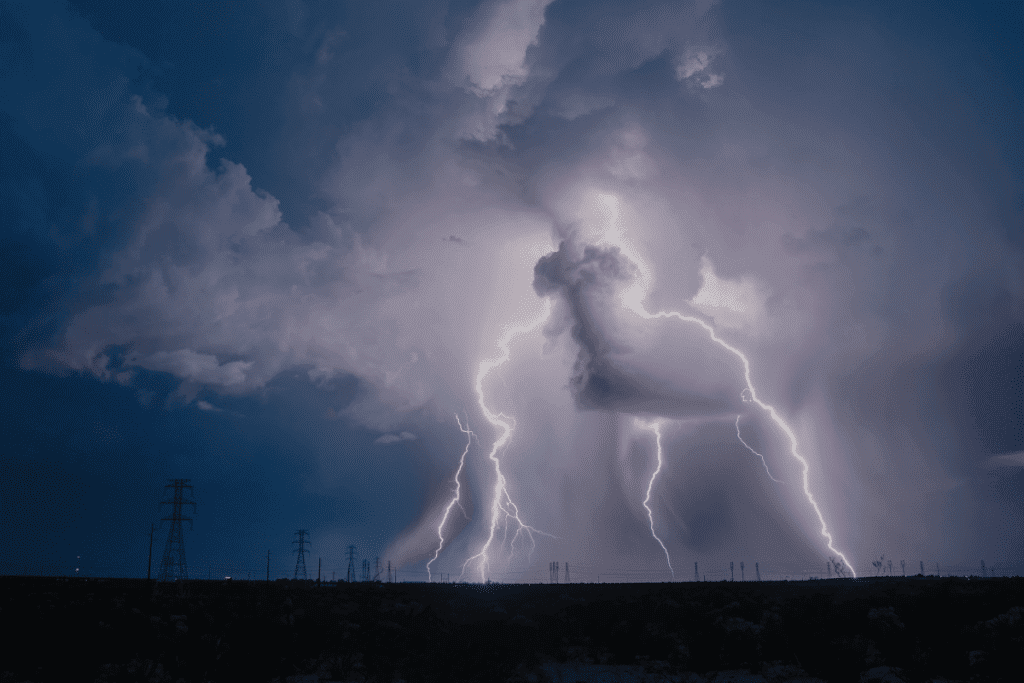
Arizona gets some of the most intense lightning storms in the country. It’s common to see hundreds of strikes per hour, with bolts stretching from one side of the sky to the other.
Why this is dangerous for travelers:
- Lightning can strike miles away from a storm. If you hear thunder, you’re already at risk.
- RV parks, campgrounds, and open desert have little natural cover. If you’re the tallest object in an area, you’re a target.
- Electronics in your rig are vulnerable. A close lightning strike can fry anything that’s plugged in.
How to stay safe:
- If you hear thunder, get inside. A vehicle, RV, or building is safer than being outside.
- Stay put for 30 minutes after the last thunderclap. Lightning can still strike after a storm appears to be over.
- Unplug electronics. Use surge protectors to protect your RV’s electrical system.
Haboobs (Massive Dust Storms)
Arizona’s famous haboobs are massive walls of dust that roll in ahead of storms. These storms reduce visibility to near zero in seconds and can last for miles.
Why this is dangerous for travelers:
- Driving in a dust storm is deadly. Visibility disappears in an instant, leading to massive pileups on highways.
- Dust gets into everything. If your windows are open, expect a layer of fine desert grit on everything you own.
- They can hit with little warning. Even if it looks clear, winds can shift suddenly and send a haboob your way.
How to stay safe:
- If you’re driving, pull over immediately. Get fully off the road, turn off your lights, and wait it out.
- Close up your RV or tent before a storm. Dust finds its way into every crack.
- Check forecasts for dust storm warnings. The National Weather Service issues dust storm alerts when conditions are right.
How to Experience the Arizona Monsoon Safely
Monsoon isn’t just something to survive, it’s something to experience. The storms are incredible to watch, but they’re even better when you know how to enjoy them safely.
- Find a safe place to camp. Higher ground is better. Avoid washes or areas that could flood.
- Check the forecast daily. Even if it’s clear now, a storm can build in minutes.
- Watch storms from a safe distance. The best views are from inside your rig, under a covered porch, or from a safe overlook.
- Photograph responsibly. Arizona’s monsoon storms are legendary for photography, but don’t risk your life for a shot.
The Arizona monsoon is unpredictable, wild, and one of the most beautiful things about summer in the desert. Respect it, and it’s one of the most unforgettable experiences you’ll ever have.
Still Here? You Must Be the Human Equivalent of Well-Seasoned Cast Iron Pan.
Most people give up early, like tourists who underestimate the Arizona heat. But not you. You’re built differently. So why not join us for a camping chair on Substack?