

I’d love to tell you this site runs on enthusiasm. But since our web host doesn’t accept high-fives as payment, we use affiliate links for products we love. So if you decide to go on a caffeine-fueled spending spree, we may earn a small commission. It keeps this site running and ensures our camping gear is more “adventure-ready” than “held together with zip ties.”

If the water heater in your RV starts leaking, you’re basically left with two options:
- Direct replacement with another tanked setup, or
- Switch to a tankless water heater system
After replacing ours once already, we chose door number two.
Six years after our first replacement, the second water heater developed the same pinholes in its aluminum tank and started leaking behind our bedroom cabinet.
This time, we installed a Fogatti Ultra RV tankless water heater. And it’s turned out to be one of the smarter upgrades we’ve done with our 2006 Fleetwood Discovery.
Why We Finally Ditched the Tank
Our first water heater lasted 13 years before corrosion caused pinholes to form in the aluminum tank. When we replaced that water heater six years ago, we went with a direct replacement.
And that’s when we discovered why our coach never ran out of hot water like most people’s rigs do.
Our motorhome came with that we call the Cadillac of RV water heaters: a unit with a mixing valve that stretched how many gallons of hot water we could get at one time. Because of that, we never had to experience the dreaded “RV prison shower.”
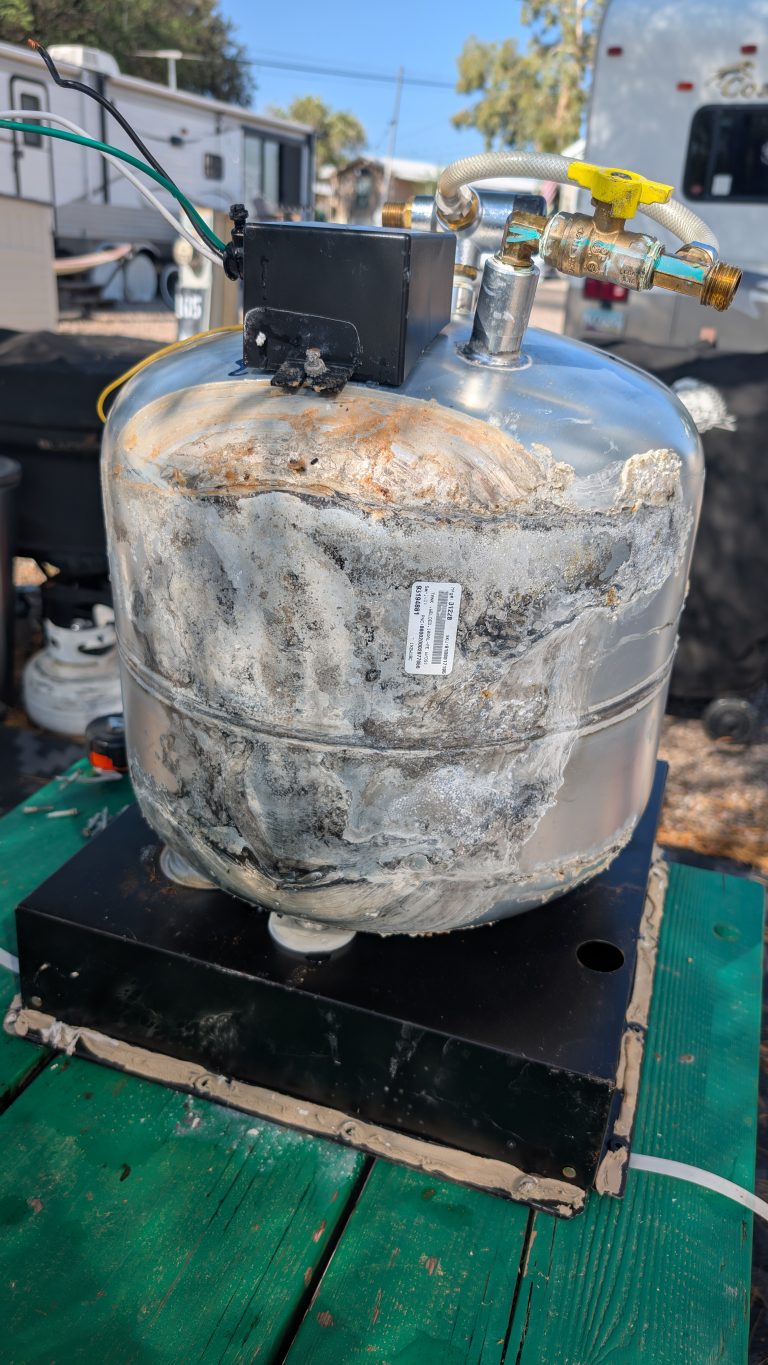
But that Cadillac had a fatal flaw. Unlike many RV water heaters, ours didn’t come with a sacrificial anode rod. Instead, it relied on an aluminum tank.
That might sound good on paper, but in practice it meant that once corrosion started, there was nothing to protect the tank.
The pinholes we dealt with both times were the direct result of that design.
Replacing it once was irritating.
Replacing it a second time made us realize we needed a different solution altogether, and that’s what sent us down the rabbit hole of RV tankless water heater options.
Why We Picked the Fogatti Ultra
When you swear off tanked water heaters, you find yourself in a very specific corner of the internet. One where you start comparing BTU charts at two in the morning.
After more hours of nerdy research than we should probably admit, we landed on the Fogatti Ultra tankless water heater.
First, it’s powerful. The system puts out 66,000 BTUs, which means it can deliver a steady stream of hot water even if you’re running the shower and kitchen sink at the same time.
Some tankless models struggle with that, especially when the incoming water temperature drops in cooler months (and yes, we DO experience cold water in Arizona).
Second, it’s efficient. Traditional RV water heaters keep six to ten gallons hot all day, even when you’re not using them. That’s like leaving a pot simmering on the stove around the clock. The Fogatti only uses propane when you turn on the hot water.

Third, the controls make sense. You can set an exact water temperature at the wall panel instead of playing “guess the mix” with the hot and cold knobs. I set mine to 111 degrees and forget about it. Once you learn to trust the setting, it just works.
Fourth, it fits our setup. The Fogatti’s depth and vent placement lined up well enough that we didn’t have to reroute anything major.
It also comes with its own freeze protection, which matters more than you’d think in the Sonoran Desert where winter nights can dip below freezing.
Finally, it’s quiet. Our old tanked heater had the subtlety of a jet engine. The Fogatti burns softly and then fades into the background. For something that runs on propane, it’s surprisingly civilized.
Between performance, efficiency, and cost, it felt like the sweet spot for our rig. It wasn’t the cheapest option, but it had the best mix of reliability and design without the premium markup you see from brands that mostly sell stuff for high-end motorhomes.
Installing a Tankless Water Heater in an RV
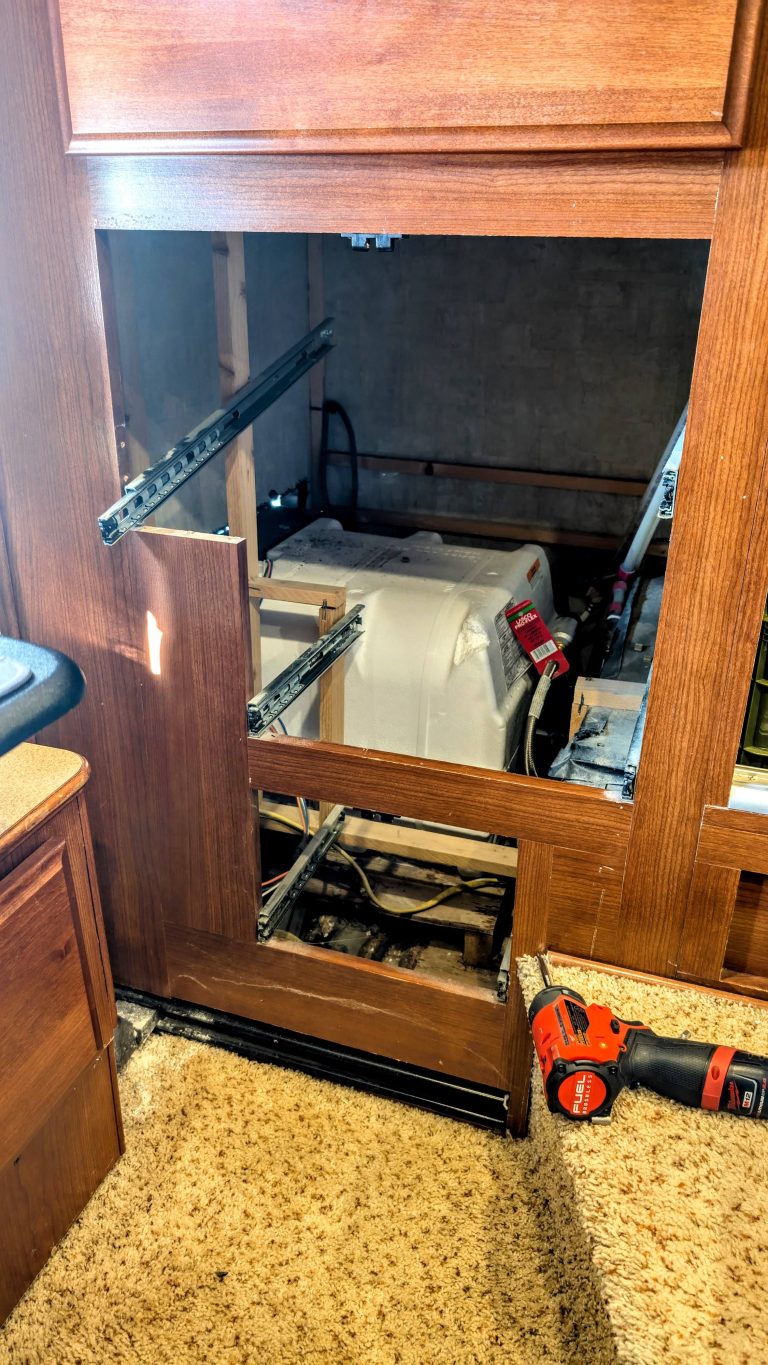
Our Fleetwood Discovery wasn’t built for easy maintenance. The water heater resides behind the bedroom drawers, which means removing half of them to reach the connections.
During our first replacement years ago, I was the only one small enough to get all up in the compartment and mess with the fittings. And that required lifting one boob over the drawer running and sitting here awkwardly tit-straddled until the job was done.
This time, we got smart and removed that drawer runner. No boobs were smashed in the installation of the Fogatti.
But of course, very few things happen during RV repairs that don’t require struggling. In our case, it was summer in the Sonoran Desert. Which meant it was 105 degrees outside.
Working in those conditions felt like doing maintenance inside the Devil’s jockstrap. There was a silver lining, though: our tap water was 90 degrees, so our unheated showers were lukewarm while we waited for the new water heater to arrive.
The Fogatti came with instructions for a 13-inch external water heater compartment opening. Is ours 13 inches? Hell no. It’s 18 inches.
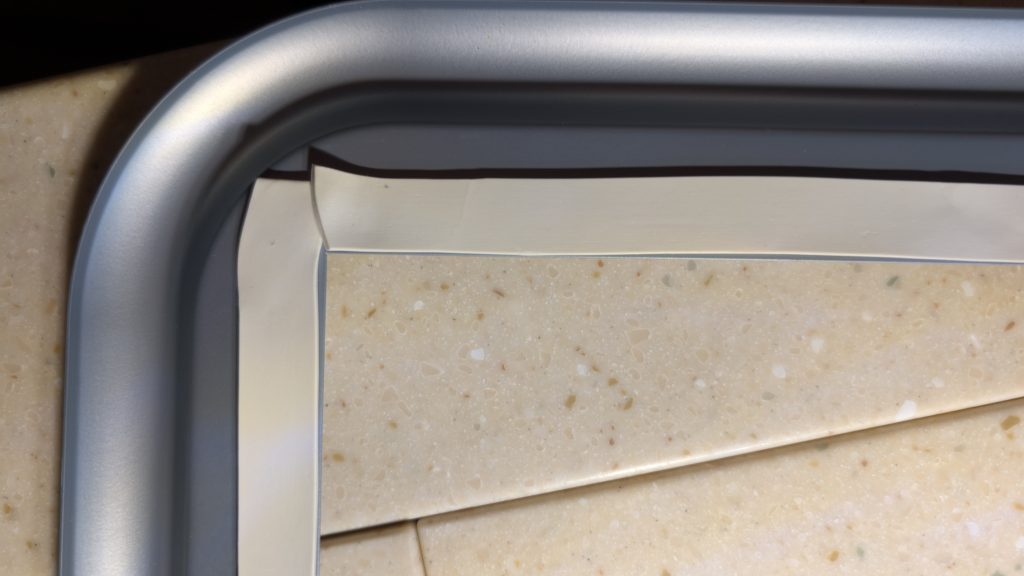
So we had to order an additional external door and size the opening with PVC trim. Using butyl tape, our old enemy from the time we had to remove a window to replace our refrigerator, we filled the gap to make sure moisture can’t get in.



The propane line was another saga. The Fogatti is smaller than our old water heater, which meant the copper line no longer lined up.
We tried to move it carefully using a copper line bending tool from our local hardware store, but it still kinked.
Fortunately, the slight kink in the propane line hasn’t affected performance. The heater fires up quietly and reliably every time.
Living With a Tankless Water Heater
If you’re used to tank-fed systems where you crank the hot side wide open and adjust temperature with the cold, you’ll need a minute to adapt.
Tankless units have a control panel that lets you set your exact temperature.
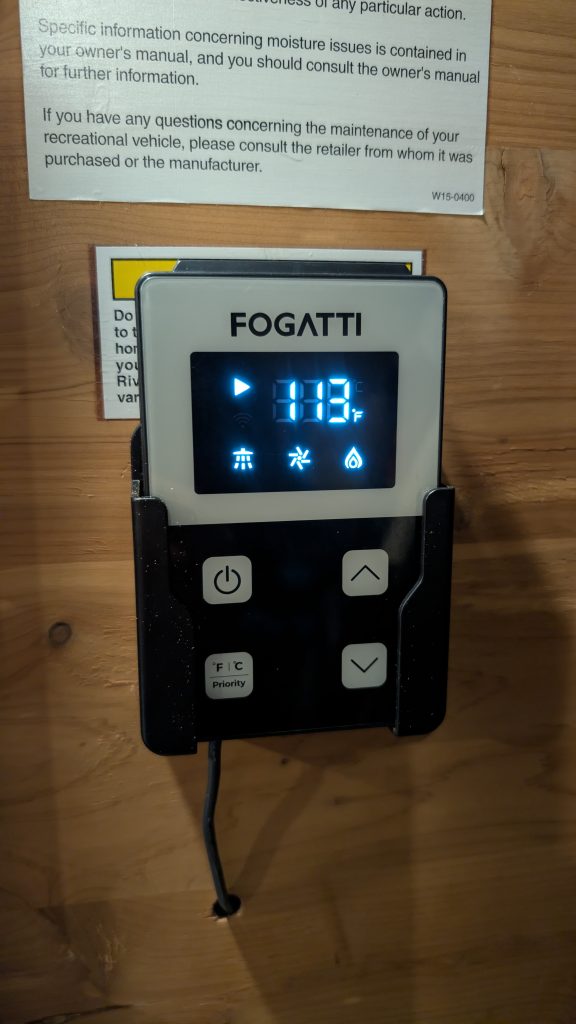
Mine’s set to 111 degrees because I like my showers somewhere between “spa day” and “Chernobyl meltdown.”
Once you find your sweet spot, the water stays steady. If you try to mix hot and cold like you did before, though, you’ll confuse the heater (and yourself when you don’t get any hot water from the tap).
Learning curve conquered, the Fogatti Ultra now delivers endless hot water. My showers are scalding again, and society is safe from our collective swamp ass. You’re welcome.
Things to Know Before Going Tankless
While switching to a tankless water heater was an automatic win for us, it may not be a fit for you. It depends on where and how you like to spend time in your RV.
What’s Great
- Endless hot water once the burner kicks on
- Propane only burns when you ask for hot water from the tap
- Precise temperature control at the wall panel
- Weighs less than a tanked system
- Quieter operation (less whoosh of a burner cycling on and off all day and night)
Potential Downsides (Depending on Your Setup and RV Life Needs)
- You waste more water waiting for it to get hot, which fills the gray tank faster
- Needs a minimum flow rate to fire, so trickle rinses don’t cut it
- Pulls a short burst of cold between on-off cycles
- Loses efficiency at high altitudes or in cold weather
- Demands regular flushing and descaling if you’ve got hard water
- Installation can be fiddly if your old opening doesn’t line up
Using a Tankless Water Heater While Boondocking
While switching to a tankless water heater comes with pros and cons just like any other upgrade, it can still work off-grid. You’ll just have to do a bit more defense.
- Catch the warm-up water. Keep a small basin in the shower and reuse the water for dishes or rinsing gear.
- Skip the mixing game. Set the temperature you want at the control panel and only use the hot tap.
- Watch your battery levels. The control board needs 12V power to run, so low batteries might mean no hot water.
- Clean it regularly. If your water has minerals in it, flush your tankless water heater with vinegar every 3-6 months to keep it crud free.
Tankless systems shine when you have hookups and reliable power. For boondocking, it’s doable once you understand how they operate and adjust your routine.
Hot Water and Hard Lessons
Every project in this motorhome starts with optimism, wanders into frustration, and eventually lands somewhere useful.
This water heater replacement was sweaty, awkward, and full of language that would make a sailor blush. But now we have consistent hot water and one less thing leaking behind our walls.
Living in a motorhome teaches you to meet problems head-on instead of waiting for perfect timing or perfect tools. And there’s power in solving what you can with what you have.
This one was worth the scraped knuckles and the heat. The Fogatti might not be the answer for everyone’s setup, but for us it justified the trouble.
And that’s all I really ask from the things we install in this rolling apartment.
Still Here? You Must Be the Human Equivalent of Well-Seasoned Cast Iron Pan.
Most people give up early, like tourists who underestimate the Arizona heat. But not you. You’re built differently. So why not join us for a camping chair on Substack?